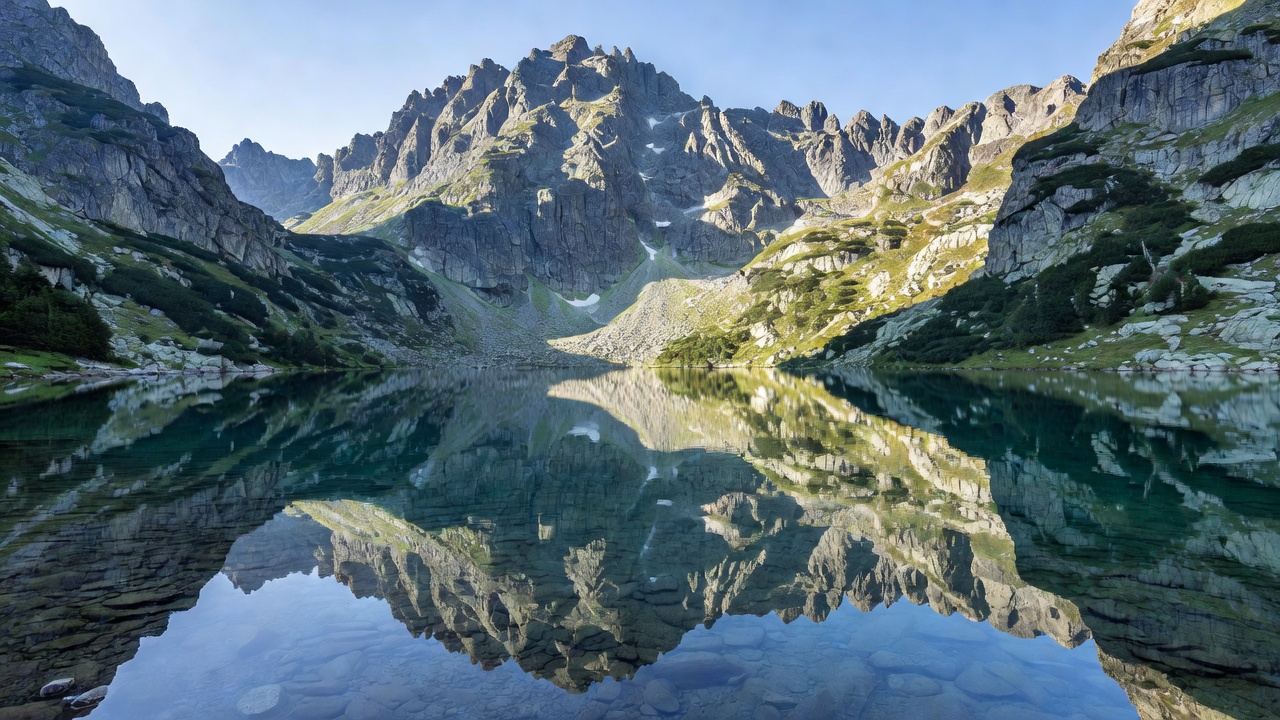
The Alpine Ridge of Central Europe
Forming the natural southern frontier between Poland and Slovakia, the Tatras represent the only alpine-type mountain range in the entire 1,500-kilometer Carpathian arch. Jagged granite massifs shoot vertically out of glacial hanging valleys, holding deep sapphire tarns such as Morskie Oko ("Eye of the Sea") and Czarny Staw Pod Rysami.
The highest elevation within Polish borders is the northwestern peak of Mount Rysy, soaring to 2,499 meters above sea level. Clambering up its steep chains and couloirs demands grit, rewarding scramblers with panoramic views across hundreds of peaks, plunging cirques, and roaming herds of endemic Tatra chamois and marmots.
The Zakopane Style of Timber Masterwork
At the foot of the massif lies Zakopane, elevated at the turn of the 20th century from an obscure pastoral hamlet into Poland's intellectual and avant-garde artistic refuge. Stanisław Witkiewicz pioneered the famed "Zakopane Style" (Styl zakopiański), rejecting Viennese or Russian imperial architecture in favor of traditional Goral log construction.
Using thick pine beams joined without metal nails, his masterworks—such as Villa Koliba and Villa Pod Jedlami—incorporate sunbeam woodcarvings (słoneczka), delicate edelweiss floral motifs, and steep shingled roofs engineered to shed heavy mountain snowfalls.
Goral Highlands Identity and Mountain Pastoralism
The indigenous highlanders—the Górale—maintain a distinct cultural autonomy. Clad in embroidered wool trousers (portki) adorned with ornate parzenica patterns and broad leather belts, they preserve centuries of transhumance pastoralism.
In bacówki (mountain shepherd huts), shepherds heat raw sheep milk over open wood fires to produce Oscypek: an ancient spindle-shaped cheese pressed inside hand-carved wooden molds and smoked with beech and pine branches. Crisp on the outside, salty and elastic within, it remains the consummate symbol of highlander culinary endurance.